
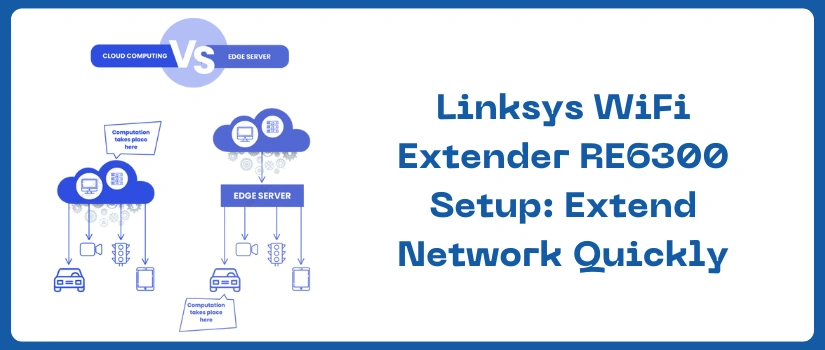
The amount of time and the way the website loads directly impacts your business. Fast loading keeps users happy. It also helps with your site ranking. Basically fast loading sites rank higher in search results. Therefore you must choose the right rendering method. So in this blog post we’ll compare edge rendering vs server side rendering. Both have their own advantages and disadvantages. So we’ll help you choose the one that is suitable for your specific project.
Understanding Server Side Rendering
Server side rendering or SSR is a traditional and trustworthy method. With this rendering method the web server creates the full HTML page. It does this for every single user request. This complete page is then sent to the browser.
✓ Benefits Of SSR
- Firstly the users see content very quickly because the browser does not wait for JavaScript to run. This is excellent for first impressions.
- Secondly, search engines love SSR because crawlers get a whole HTML file immediately. This makes indexing quick and more reliable.
- Up next, the heavy rendering work is on the server. Therefore it reduces the burden on the user’s phone or computer.
✓ Drawbacks
- As written above the server must render every page uniquely. For this you require more powerful and expensive servers. This can be a drawback for some users.
- The next problem is that of latency. The page must travel from the origin server. If a user is far away, the initial load is slower. Thus the distance creates a delay.
Understanding Edge Rendering
Simply you can consider edge rendering a modern twist on the Server side rendering. Edge rendering uses Content Delivery Network (CDN). The rendering logic runs on servers closer to the user. These servers are located at the edge of the network. This drastically cuts down the travel distance.
✓ Perks Of Edge Rendering
- The first and foremost benefit is ultra-low latency. This means very fast load times globally. Geography is of no concern.
- The next benefit is that of Scalability. The workload is spread across many edge nodes. It handles traffic spikes better than a single central server.
- You get the speed of a CDN with the power of SSR. Content can be personalized as per the location immediately.
✓ Disadvantages
- Firstly, it is a little complex when it comes to setup. It requires using platforms with edge functions.
- Yet another drawback is limited runtime. They have limits on execution time and memory.
Edge Rendering Vs Server Side Rendering
Both methods are suitable for different needs. So basically the choice is about priority. Both methods offer great SEO and fast initial paint. The key difference is in the speed and global reach.
Server Side Rendering or SSR is great for apps with a local audience. It works superbly well if your users are near your main data center.
Edge rendering vs server side rendering highlights global performance. Edge rendering provides near instant loading worldwide. This is important for e-commerce and global content sites.
For a fast growing global platform, edge rendering wins on speed and distribution.
The Final Verdict!
There is no single best option. The choice actually depends on your project goals.
Many developers now use a mix. They may use Static Site Generation (SSG) for simple pages. Then they use edge rendering for personalized parts. This hybrid method gives maximum performance. This is the new frontier beyond just edge rendering vs server side rendering. To know what suits your project the best, you can take help from our experts. Start the conversation today. We look forward to serving you.
